
Follow The Arborist

The Arborist logo
The ArboristPeter Toler
Historic Trees of Mobile

Living monument • Downtown Mobile

L'Arbre de Pau

The original live oak dedicated on April 26, 1981, stands near Fort Condé as a living symbol of friendship between Mobile and Pau, France, and of Mobile's recovery after Hurricane Frederic.

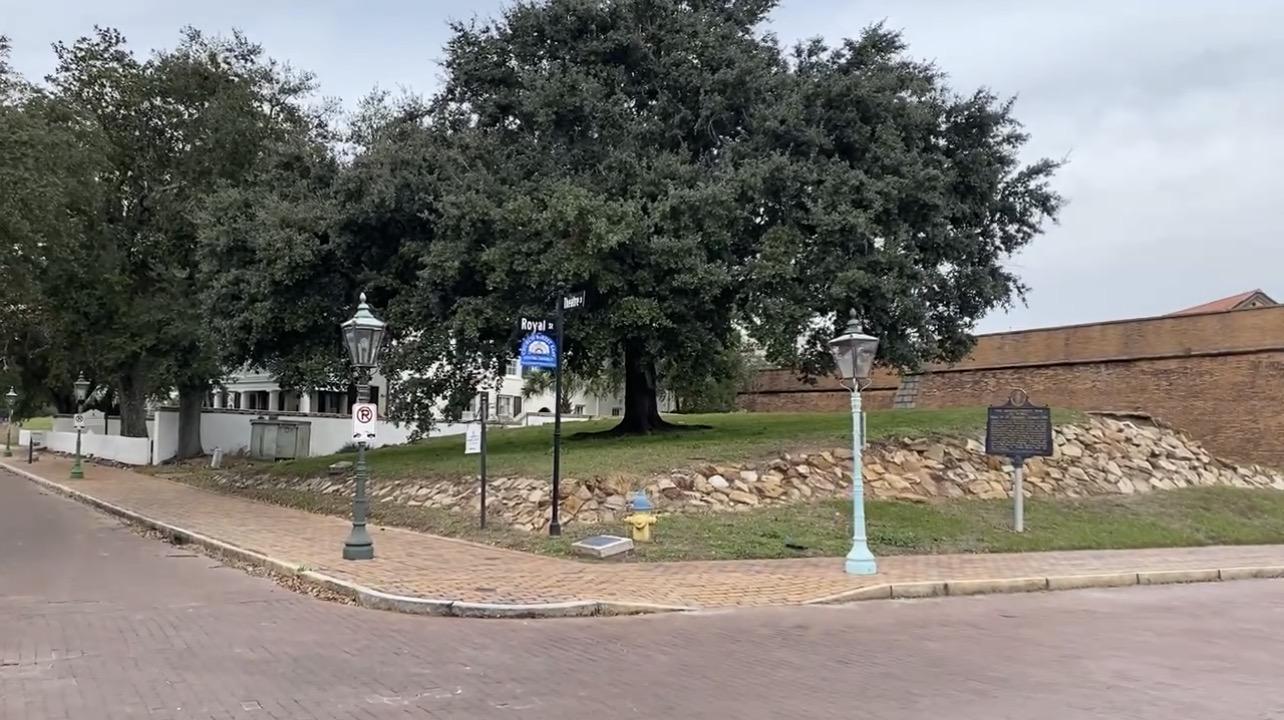
The original L'Arbre de Pau live oak near Fort Condé in downtown Mobile, Alabama
The original live oak near Fort Condé at Royal and Church streets in downtown Mobile.
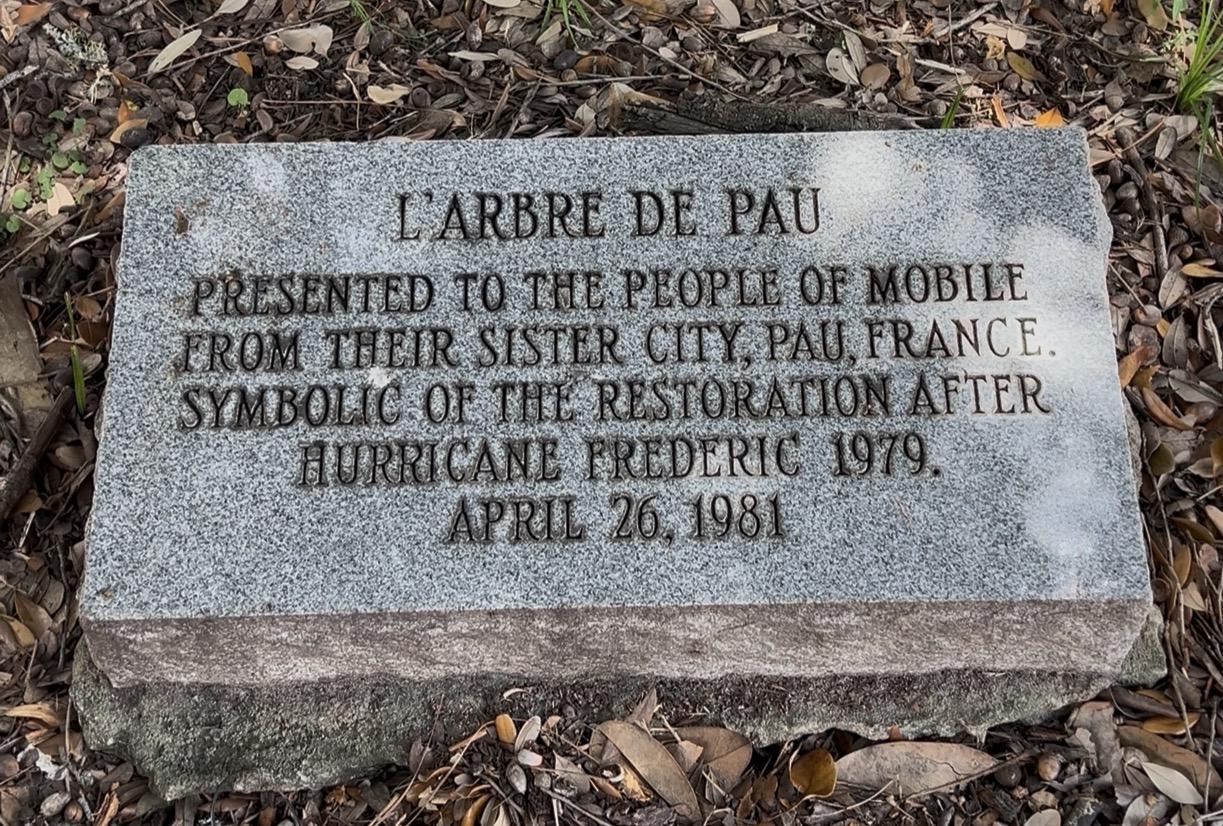
The L'Arbre de Pau monument inscription dated April 26, 1981
The monument records the gift from Pau, France, and its connection to Mobile's restoration after Hurricane Frederic.

Watch the story

See L'Arbre de Pau today

Visit the original live oak and learn why this 1981 dedication still matters to Mobile's history, urban forest, and relationship with Pau, France.

Watch on YouTube

About the monument

L'Arbre de Pau translates as “The Tree of Pau.” The dedication linked a living tree to international friendship and to Mobile's recovery after a catastrophic hurricane. The choice of a tree made the memorial dynamic: it would grow with the city rather than simply mark a moment in stone.

Monument inscription

L'Arbre de Pau
Presented to the people of Mobile
From their sister city, Pau, France
Symbolic of the restoration after
Hurricane Frederic 1979
April 26, 1981

Transcribed from the monument photographed on site.

The tree today

The original 1981 live oak remains at the monument near Fort Condé in downtown Mobile. Its setting connects the dedication to the city's French colonial history and to a public landscape visited by residents, students, historians, and travelers.

Field verification by The Arborist identifies the tree as a live oak and confirms that the original planting remains present.

Hurricane Frederic and Mobile's urban forest

Hurricane Frederic struck the Alabama Gulf Coast in September 1979. Mobile experienced widespread structural damage, long power outages, and extensive tree loss. The damage was not limited to individual properties: it changed streetscapes, neighborhoods, shade patterns, and the character of the city's urban forest.

Replanting after a major storm is more than replacement. It is the beginning of a decades-long recovery process that depends on species selection, planting quality, maintenance, structural pruning, and protection from future construction and storms.

Mobile and Pau, France

Mobile and Pau formed a sister-city relationship in 1974. Such partnerships are intended to encourage cultural exchange, civic friendship, and mutual understanding. Presenting a tree after Hurricane Frederic gave that relationship a permanent, visible expression in Mobile's landscape.

The gift also resonates with Mobile's French heritage. Mobile began as a French colonial settlement, and Fort Condé is one of the city's most recognizable reminders of that history.

An urban-forestry perspective

Trees as living monuments

A memorial tree records history through continued growth, seasonal change, storm response, and community memory.

Long-term stewardship

A dedication is only the beginning. Soil care, pruning, inspection, protection, and succession planning determine whether the memorial endures.

Historic-tree preservation

Preservation balances cultural significance with tree condition, site use, risk, construction pressure, and realistic maintenance.

Why arborists matter

Arborists help communities identify defects, prescribe appropriate work, protect roots, document condition, and make decisions that preserve both safety and history.

Timeline

1974

Mobile and Pau establish their sister-city relationship.

1979

Hurricane Frederic strikes the Alabama Gulf Coast and causes severe damage across Mobile, including extensive tree loss.

April 26, 1981

L'Arbre de Pau is dedicated in Mobile as a living symbol of friendship and recovery.

Present day

The original live oak remains at the monument near Fort Condé and continues to serve as a living memorial.

Fun facts

The name L'Arbre de Pau translates from French as “The Tree of Pau.”
Mobile was founded as part of French colonial Louisiana, making a gift from Pau especially meaningful within the city's French heritage.
Fort Condé recalls the French fortification that protected colonial Mobile; the present reconstructed fort opened during the United States Bicentennial era.
Hurricane Frederic made landfall in September 1979 and was one of the defining natural disasters in modern Mobile history.
Living memorials require continuing care. Unlike stone monuments, trees change, age, recover from storms, and depend on stewardship.

Frequently asked questions

What does L'Arbre de Pau mean?+

It means “The Tree of Pau” in French, referring to Pau, France, Mobile's sister city.

Where is L'Arbre de Pau?+

The monument and live oak are in downtown Mobile near Fort Condé, within the city's historic core.

Why was the tree planted?+

It was dedicated in 1981 as a gift associated with Mobile's sister-city relationship with Pau and as a symbol of renewal following Hurricane Frederic.

What species is the tree?+

The tree is a live oak.

Is the original tree still alive?+

Yes. The live oak standing at the monument is the original tree dedicated in 1981.

Why is it historically important?+

It connects Mobile's French heritage, international friendship, hurricane recovery, and the long-term value of urban-forest preservation in one living landmark.

Sources and research notes

This page separates archival facts, field verification, and interpretation. The original tree and live-oak identification are field-verified by The Arborist. Historical claims should continue to be strengthened as dedication photographs, municipal records, and archival newspaper coverage become available.

Top ↑